


I visited Montezuma Well while taking a morning off from hiking during our early March, 2020 trip to Sedona. I didn’t know what to expect. I’ve seen the exit sign for it many times while traveling I-17 in Arizona and my curiosity was about to be satisfied. Having visited Tuzigoot National Monument and Montezuma Castle earlier in the morning, I was learning about the Sinagua Native Americans that lived in the Verde Valley of central Arizona prior to 1425 AD. Montezuma Well was only 20 minutes from Montezuma Castle National Monument and 20 minutes from our hotel in Sedona.

Location
Information
Montezuma Well is actually not a well. It is a water source. It almost looks like a pond, yet larger. Montezuma Well is basically in a desert, rainfall is scarce and averages about 13 inches a year. Regardless, this water source stays at a constant level as it is being fed by springs. It was once an underground water source until the top collapsed and the current sinkhole appeared. About 1.5 million gallons of water flow daily from two vents at the bottom of the sinkhole. From my understanding, the water leaves the sinkhole through an outlet that flows to an over 1000 year old irrigation ditch along Beaver Creek. Beaver Creek flows to Montezuma Castle. The area surrounding the water is limestone.

Ancient Homes and People
Sinagua People
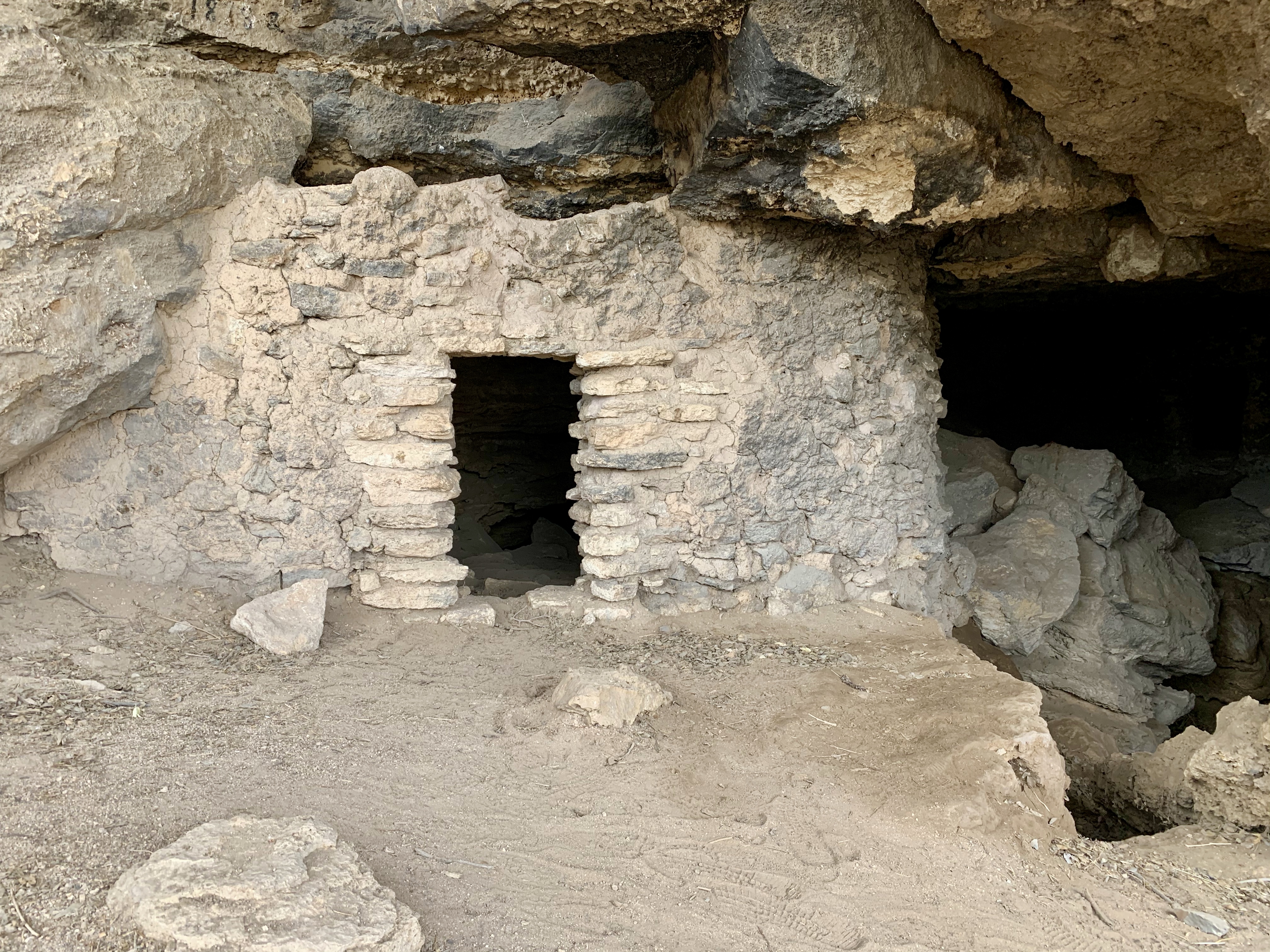
The cliffs above Montezuma Well are limestone and you can see pueblo homes built into them. You can see ruins of the homes built both high above the sinkhole and also lower near the water. The Sinagua People built these homes between 1125 and 1400. These were peaceful people and had many settlements around the Verde Valley in places like Tuzigoot and Montezuma Castle. Like the rest of the ancient people in the Verde Valley, they also farmed and traded. The Sinagua also built homes above Montezuma Well between the sinkhole and Beaver Creek. The Sinagua left the area for reasons unknown. The Hopi, Zuni, and Yavapai tribes all have histories of ancestors living here.

Hohokam People
There is also a pit house you can see near Montezuma Well. It is believed that the Hohokam people lived here around 1050 AD. In addition, it is believed that they are the people who dug the irrigation ditches to water their crops.

Chief Montezuma
Even though Montezuma Well and Montezuma Castle were named after the Aztec Chief by the same name, Chief Montezuma was never known to be this far north nor did he live during this era.
The Trail at Montezuma Well
The trail at Montezuma Well is a well marked cement trail. It begins at the Ranger Station and is a 1/3 mile loop trail with interpretative signs around it. First the trail will take you to a great overview of Montezuma Well. I did not know what to expect so it was quite a surprise to see that it was so large. I was also surprised it was more like a large pond or small lake than a well.


Swallet Ruins
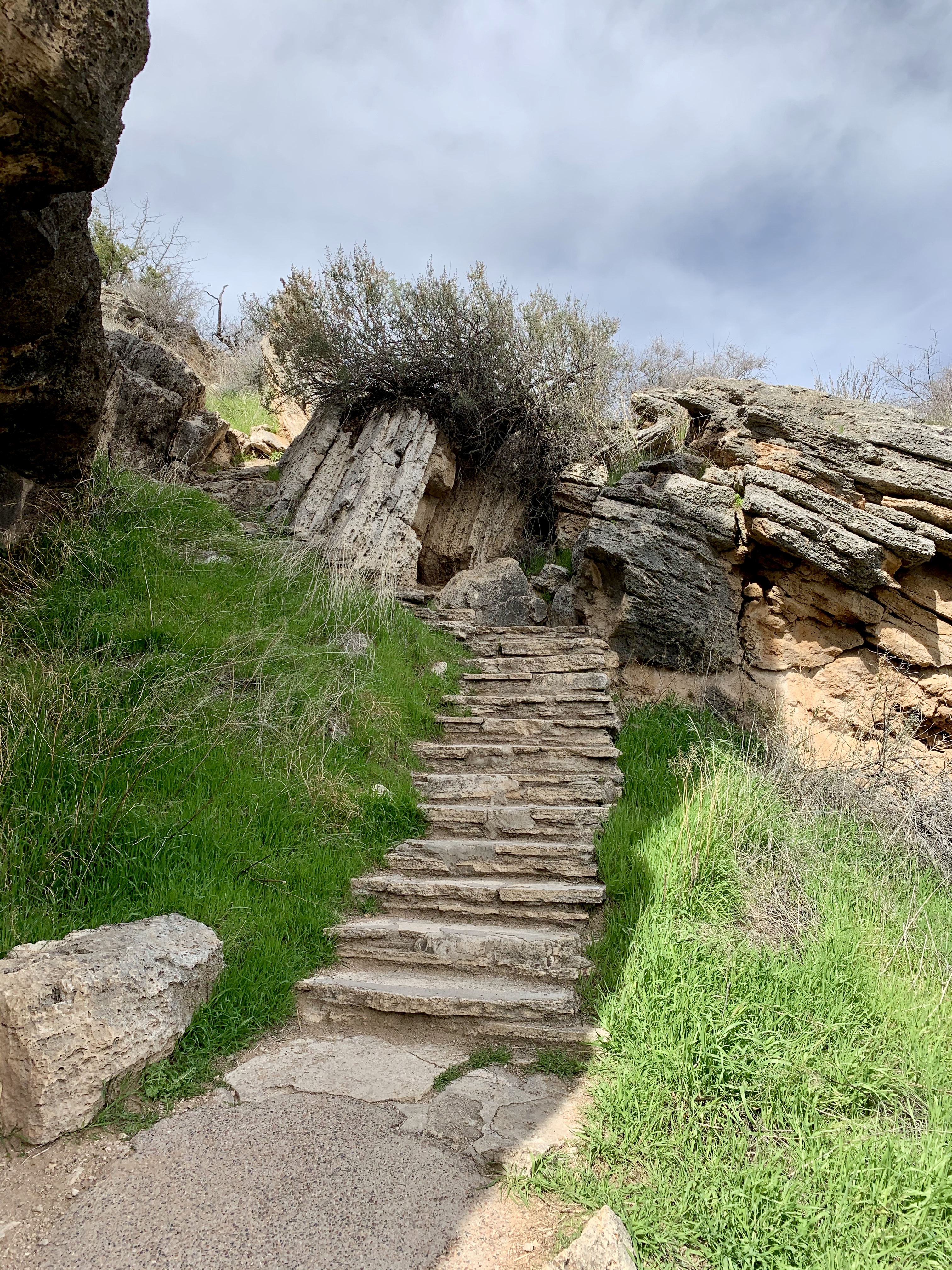
After the overlook, you can take the optional trail to the Swallet Ruins near the water. You will need to follow the stairs down and then back up again. I counted 118 steps. You will pass through some trees and a shaded area. It is actually a nice cool area which surely kept away some of the Arizona heat.



Once here, you will come across some ruins almost under the cliff.


Above the Rim
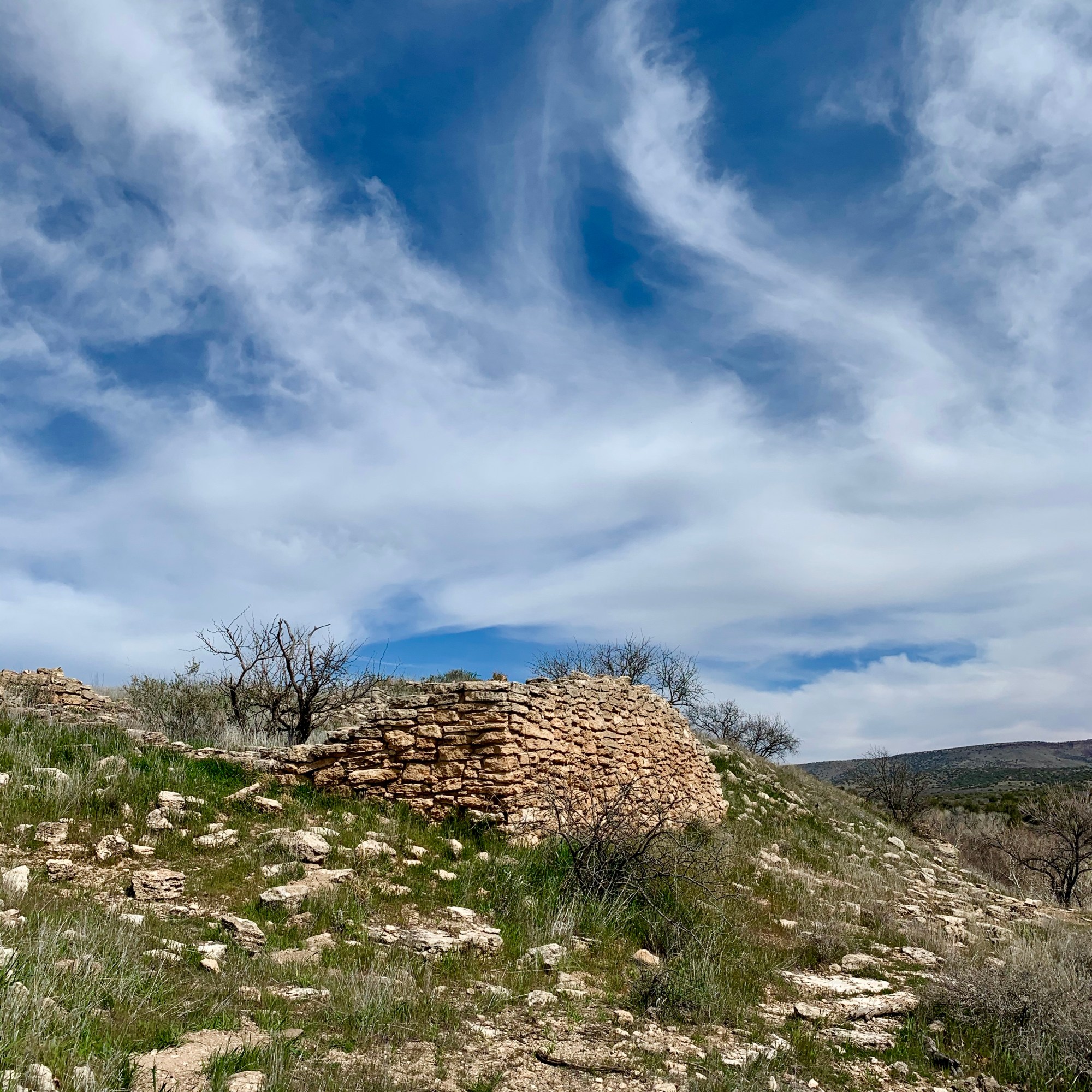
As you continue on the trail towards the water outlet, you will notice ruins which run along the top of the rim. I did not find information on this but my assumption is they were built about the same time as the Swallet Ruins and were homes to the Sinagua People.



Water Outlet and Beaver Creek
You will find another side trail which will take you down to the water outlet. Again, this trail starts with steps, although not as many as earlier. I counted 48 steps. It is a nice trail along the irrigation ditch and if you look further out you can see Beaver Creek.


At the end of this side trail you will see a large white bark Arizona Sycamore tree, which is really grand.


Conclusion
After the water outlet, you will follow the trail back to the ranger station.
In conclusion, I really enjoyed Montezuma Well. The 1/3 of a mile hike was really enjoyable. It was an easy walk, there was a lot to see, and a very interesting part of history.


Follow me on Instagram!!!!
For More Posts on the Sedona Area you can follow these links:
Devil’s Bridge Trail, March 2020
Soldier’s Pass Trail, Sedona, March 2020